Sunday, May 1, 2011

Sustainable(r) Living

I'm a pretty big believer in putting my money where my mouth is and walking the talk, and so on. Fortunately, for me, I have been blessed with parental units who think the same way (and have the skills to make it happen). My mom and her husband, Wayne, came to visit me last week, and the "honey-do" list was long. We made it all the way through it, and then some. I can't thank them enough. I feel so lucky and blessed and loved.

Wayne is about as handy a man as you'll find, and he isn't happy unless there is a project or two to finish, followed by lunch, a nap another project, and a beer. So, we started each day of their 10 day "vacation" with a new project, followed by a trip to Lowes (or two). As promised earlier in this column, we got the insulating blinds on the wall of windows (on the *southwest* side of my house) hung first thing. I think this might have been self-preservation on their part--to ward off the heat of Georgia that was already thinning their Minnesota blood. The blinds make a HUGE difference. In years past my house would have been a airless oven in the afternoon, even as early as April. Now--even after a couple of 90 degree days I come home to a cool, shaded haven. They set me back $70 each from BlindsChalet.com and will likely pay for themselves in a few months. And, they are beautiful. Do it.


Next up was removing and replacing the old kitchen countertop, which I must say I *hated*. While not a sustainable living improvement, it sure improves my mood in the kitchen, which is sort of essential to the kind of sustainable living I chose to do. I observed that all the improvements I have made to my house and yard are all about food. Um, yeah. I choose to believe that I do *not* have an unhealthy obsession with food, rather a unusually consistent theme in work, life and play... Anyway, my new beautiful kitchen, which includes a new sink, a new energy-efficient light fixture, a fixed dishwasher and a gorgeous tiled backsplash, has made even more joy out of being in my favorite place in the house. Is it even possible? Yes.


A new raised bed, a potato tower and two rain barrels came next (and a clothesline, which I have yet to use because I lack the necessary accoutrement--clothespins!). Mom and I tackled the wood-working while Wayne got to work with the rain barrels. Watching Wayne work, I realized that it was an unbelievably easy exercise to trim the downspouts and install a few new elbows to direct the rain into the barrels. Even though I am mostly a novice with tools, I am going to tackle installing three more on the remaining downspouts on my house. That night, the 50 gallon barrels filled up in less than 5 minutes in one of Georgia's famous downpours. Water that would ordinarily have been redirected god knows where through the storm sewer now makes watering my food forest a breeze. Incidentally, I use on average, 50-100 gallons of water/day, so it's a nice visual reminder of my actual impact on the water world. They cost me $50 each + a few dollars for the downspout attachments. It's hard to assess the savings that accrue from "free" water, but this will surely save me a lot of money this summer since I have amped up my gardening a great deal from years past.


The raised beds and potato tower (of which I could use about 5 more!) have yet to see much action (more later!), but the chickens have taken to roosting on the edge of the raised bed at night, and are helpfully fertilizing the garden while they sleep. This pregnant lady sure appreciates this little favor from them. On the last day of their trip, after the wonderful baby shower organized by my dear friends, Mom painted the nursery while I put my feet up. I can't think of a better couple of people to help me through this thing called life. Thanks to them, and following their example, I can live life a little better, and bring this baby into a world of love, mutual aid, right living and closed loops.

Live, love and work for each other--we're all we've got.

Wednesday, April 13, 2011

Blueberry Jam

No, this is not another apocalyptic manifesto; just a little (slightly ranty) observation about how we really have to buy a lot less stuff than we think.

I had a bunch of blueberries from 2009 in my freezer that I needed to deal with because they were getting a bit too stale to eat. After cleaning out the last jar of purchased jelly, I thought, hmmm...I prattle on a lot of about food sovereignty but I still buy a lot of stuff that I eat. Maybe it's time to make jam. I've made jam in the past, but being a lazy bum, I got out of the habit. And I *try* not to eat jam because it's not so good for my health, but I eat it anyway, so why not do it myself and make it low or no-sugar?

This past weekend I bought some jars and some pectin and some organic unrefined cane sugar--about $10 bucks worth of stuff, half of which can be reused. And on my lunch break today--feeling a bit inspired to do something other than answer emails, read proposals and revise papers, I found my canner, got out my blueberries and washed up the jars. The rest went a bit like this: heat blueberries, add sugar, boil, put in a jar, walk away. The acid in the blueberries and the sugar is more than enough to preserve the jam, and the jars seal themselves as they cool.

Making a year's worth of jam (at the rate I eat it anyway--about 1 pint/month) took approximately 20 minutes, and cost me less than a dollar a jar (the blueberries were free). My jam tastes like heaven (I must say) and only has 3 grams of carbohydrates per tablespoon--4-5 times less than many store bought varieties, and has no corn syrup or other nasty additives. I'm going to try it with honey and without pectin when the honey harvest comes in June. I am surprised (again) at how easy this whole DIY thing is---and that kind of makes me mad.

WHY on earth do we buy stuff? Who has hoodwinked us into believing that we can't do this ourselves, and in the process takes our money, robs us of our health and leaves us without the skills we need to fend for ourselves? It's time to take it all back!

Food sovereignty now!

Sunday, April 10, 2011

The People's Socialism

I don't know about you, but I am rapidly losing faith in our government to do anything at all, much less cope with the impending social, economic and environmental crises looming large in our future. I've been thinking and talking about privilege and equity a lot this semester with the awesome students in my Gender and Geography class. We often arrive at a point where we see capitalism and the monetary exchange of everything as the source of a lot of inequities. We get stuck here and feel helpless, so one day I asked them (and me) to do an exercise where we do one of three things: 1) undermine capitalism, 2) undo privilege or 3) create something new.

This challenge stumped all of us, and required us to generate possibilities for things that don't yet exist. I liken this process to the end scene of the Truman show, where Truman sails his boat through the bubble he has lived in all his life. The mast of his ship breaks the skin of the "sky" and the light of another possible world breaks though and floods onto him. (Another example of this is Plato's Allegory of The Cave. Check it out.) We remain in a paralyzed state because the things we need to live better and more fairly don't exist anymore. We need to find them and remake them through shifting our ontology--which just means we have to dream, envision and create the groundwork for a future that doesn't exist right now.

In the case of my students and myself, everywhere we turned we had to buy something. It was virtually impossible to undermine capitalism--even by bartering or home-based crafts. One student observed that she felt as though the exercise required her to give away some of her privilege--and this includes the privilege to buy whatever we need. We discussed this at length. How did we acquire privilege? How much do we actually have? How do we continue to accrue it? In most cases, capitalism and our physical and social locations afford us the lion's share of our privilege. But how would we give it away? Or stop it from accruing? These are thorny, epistemological problems that require the overhaul of entire systems.

Evening the playing field and redistributing wealth (one kind of privilege) is one of the basic premises of socialism, or at least one of its functions. Even if we wanted a socialist democracy, like those in Norway or Sweden, we are going to have to wait a long durn time for it in the United States. I, for one, am not holding my breath. I am, however, trying to think about how I can redistribute resources without having to create an entire political-economic system. What if I just used less water, less energy? In some ways this is making a socialist system possible already--voluntarily and without a lot of bureaucratic waste of time and money. As Utah Phillips famously says, "if you want something done, don't come to me to do it for you. You got to get together and figure out how to do it yourselves".

The Global North (that's us) is only about 6% of the world's population, but uses almost half of its resources. There are two scenarios that are likely to evolve from this precarious situation: The first is that the other 94% of the world is eventually going to cut off our heads, a la Roman, French, Russian, etc, revolutions. Extreme inequality doesn't usually find a bloodless resolution, and I'm pretty sure this is already underway. The other possibility (already underway) is that the rest of the world is going to want to live like us. We don't have enough Earths for that. (Take the Ecological Footprint quiz to see how you stack up: http://www.myfootprint.org/) See China eclipse the U.S. as the largest emitter of CO2. See everyone in the Indian middle class buy a car. See world food prices rise as more people start eating meat.

See Amy install solar panels. And rain barrels, insulating blinds and a clothesline.

I assigned the ecological footprint to my students in my lower-division class, and the average number of planets we need for everyone to live like us is about 5 planets. I retook the quiz, changing the parameters, until I could get it below 1 earth. This involved installing the above amendments to my house, reducing the miles I drive by taking the bus, biking etc; *never* flying ever again, purchasing carbon offsets (and/or doing it myself by planting trees) and going local and vegetarian (although there is no option for grass-fed vegetarian, so I'm sticking to that for now). These are tall orders, and it will take some time, money and patience to get there. I started thinking about this by examining my daily water and energy consumption in my house--easy enough to do by looking at your bill.

I currently use 377KwH/month or about 13 KwH/day. There is a fair bit of math involved with figuring out what that means in terms of solar panels, but I'll keep you posted! I also currently use about 82 gallons of water/day. My first goal is to reduce these numbers and see how low I can comfortably go--washing clothes 2x month, drying clothes outside, keeping the AC to a minimum, taking bucket showers...hmmmmmmmm. This seems a lot like life in India last summer on the farm. I survived. And thrived. You will too.

Examine your power bill. Think about your privilege. Have a breakthrough. Get together and do it yourselves.

Sunday, March 27, 2011

Thinking Pre-Seasonally

This is not my usual thing, but I think it's worth blogging about because I feel change is a coming, and not in a good way. Those of you who know me will find this sudden turn toward apparent pessimism a bit disturbing, but I see it as an opportunity to anticipate and prepare for what is heading down the pike toward us. If you have a feeling that things are just not quite right, don't ignore it. This is not just fear-mongering, doomsaying or 2012-apocalyps- hysteria--I'm saying that if you look at history, we've got it coming. I'm writing about this here, because I have an audience, (thanks for reading and sharing), and dealing with what is coming has everything to do with food and community.

A bit of backstory:

A few years ago my Dad (AKA Dr. Doom) shared with me a book by the name of the 4th Turning by William Strauss and Neil Howe. Around page three the authors (writing in 1997) predicted September 11th--roughly the time-frame, the method, and the aftermath. This got my attention. I read most of the rest of the book, and the jist of it is this: every hundred years or so, western societies go through a convulsive change, known as the 4th Turning, which ushers in a new era, also known as the 1st Turning. This is largely driven by cycles of history (social theorists will recognize shades of Wallerstein here), and the generations of people who are born and come of age during various periods of history. They refer to these cycles as seasons of history, and according to them we are now entering a "saecular winter". I am of the Nomad generation (called Thirteeners by Strauss and Howe) that will (with the Boomers) have to take leadership through this seasonal change. So, here, in the way that I can, I am going to start leading.

Strauss and Howe could see the 4th Turning beginning in 2005, give or take a few years. I would argue that 9/11 and the 2008 economic crash are highly related, and manifestations of a system in trouble seeking change and equilibrium. I believe we are well on our way into the 4th Turning, which lasts about 20 years, on average. Strauss and Howe call it a "crisis", which I think is just a slowly unfolding global set of events that will be more or less horrific depending on where you are when these crisis events erupt. There are economic, social, political and ecological dimensions of this, and every place will have its own unique manifestations. How we react to, lead and organize through this crisis will determine how we end up on the other side of it. Forget about American exceptionalism (if you ever believed it). The 4th Turning levels the playing field. I highly recommend that you read the book yourself, so I won't narrate much more about it here, other than what I see coming and how we can deal with it.

Here in Athens, we have economic problems with poverty that are clearly related to racial inequalities, past and present. This is related to our social problems that leave our communities deeply divided, both within and between. We have political problems that are related to our economic problems--corruption in government and tax/spending priorities that privilege the super rich. Our ecological problems relate to climate change and our susceptibility to drought, which will limit our primary economy activities (agriculture and forestry) from providing capital to the economy. Case in point, wildfires in SE GA, today. The 4th turning is, of course a social, not an ecological phenomena, but climate change and the crises this generates will only exacerbate the challenges of the 4th Turning. In Athens these will be the deepening of poverty and eruptions of violence not unlike what just happened here with the shooting of a police officer. The state, in an attempt to gain control, will increase its powers, and this never bodes well for human or civil rights. Inflation is likely to increase (and/or the devaluing of currency) and the fragile and flimsy basis of our economy will continue to falter. Investments may soon be meaningless, so we need to think about real material security through food and real social security through community.

Strauss and Howe suggest that we can best weather the 4th Turning if we start thinking now--what they call pre-seasonal thinking--about how we will have to live during the crisis, and what we want life to look like on the other side. As for me, I am saying adios (to the degree that I can) to the infrastructures that I depend on for food, water and energy. I believe these infrastructures will fail (or will fail to meet the needs of most people), and our manifest vulnerability to corporations and governments will be laid bare. I also believe that this crisis will be manifested by inflation and further contractions of our economy, which will limit our ability to consume (and make our consumer-based economy shrivel). We need to learn new habits that reflect our limited choices in the coming year. I will blog about this and more as these efforts get underway.

The second general area of preparation is linked to our dependence on institutions and our lack of inter-dependence as a community. I have eggs to share (and soon lots of other produce), so I am going to start using them to build community in my neighborhood. We'll have to stand together, or we all will fail. I have to say that I know precious few of my neighbors, but I aim to get to know them, and make the food forest of my yard a resource for our whole community. I also intend to reach out to the wider community in Athens through a community kitchen in one of the poorest, but most historic, neighborhoods in Athens.

Showing up is 90% of life, and I intend to show up for peace, community and self-sufficiency in the coming years.

Show up with me, y'all.

Sunday, March 6, 2011

Toward a Reciprocal Social Economy of Food

It's been a good week for the traffic in banned foods. I bartered my illegal backyard eggs for illegal backyard honey from the Normaltown Beekeeper and I lucked into a source of raw m__. (Woohooo! Let the cheesemaking begin!) In the wake of the supreme satisfaction I got from both of these transactions, I decided three things.

1) the banning of backyard, homescale, out-of-the-system food production is not only unethical, it's a violation of human rights. According to the Universal Declaration of Human Rights, Article 3, I have the right to life, liberty and security of person. Given that waterboarding is legal and article 5 guarantees the right to be free of torture, I understand that I won't get much traction with this argument. Having said that, somewhere, I am guaranteed the right to provide for myself (i.e., life) when it doesn't hurt anybody else (chickens don't, bees don't, raw m__ doesn't). I have a right to liberty, which means I am free to do what I wish on my private property (as long as I don't hurt others), and I have a right to liberty in my economic transactions. Suck it, neoliberals. Last, salmonella-contaminated eggs and the like, threaten the security of my person, *from the inside*, and I have a right to alternatives that don't threaten my health, or the health of my unborn baby. (Just try it, Bobby Franklin).

2) the participation in the purchase and sale of food is the stupidest thing humans have ever done. (don't feel offended...I have been doing this for 35 years...and it's not too late to get smart). Buying and selling food not only stripped us of useful skills that could be exchanged for food (for more on this, see K. Marx, Capital, vol 1), it also handed over all of our rights in the food system to the brokers who buy and sell. For the most part those jokers who make money on transactions don't give a damn what goes into your body. The only reason they pretend to care is because, legally, they have to. This means that as long as they don't get caught, they will encourage (even demand) the farming practices that get the salmonella in your egg and the e. coli in your milk. Technical fixes, like pasteurization, are unnecessary when proper farming practices are followed, but they funnel a lot of profit toward the processors (oh, right the jokers who profit from transactions...). Let's get out of this system. Now. Here's how.

3) instead of a transactional system based on money, we need to have a reciprocal exchange system based on calories. I am borrowing this partly from the solar economy literature, but I also appreciate the beauty of it's logic. First, commodities like coffee that usually come at great cost to human and ecological life, would be worth nothing since they have no calories. Therefore there would be no incentive to ship it halfway across the world. (Coffee addicts, I don't envy you the headache you will have when you wake up from the dream of global capitalism. In the meantime, sleep well and dream of large cups of coffee). Second, calorie dense foods like meat would be very expensive, thus, limiting their consumption. I am a carnivore (see the 1 chicken, 10 meals blog post), but I do recognize the incredible waste, ecological devastation and animal cruelty caused by conventional meat production. Third, low calorie, nutrient-dense foods, like kale, would be widely available (a bit like 1 dollar bills are ubiquitous) and easy to get, which is not the case now. They are incredibly easy to grow as well, so they may even disappear from circulation eventually, as we get smarter. Fourth, grains and sweeteners would be very expensive, and would force us to figure out ways to grow our own, barter for them, grow them cooperatively or find substitutes, like potatoes and honey.

I could go on, but you get the picture. We need to move toward a steady-state food system in which the inputs are equal to the outputs. One way to do this, is to start increasing our awareness of the calories in our food and use this as a basis of exchange. We can all become growers of something and exchange this on the basis of calories. Or we can examine the kind of work we do, and the calories we expend doing it, and exchange food on the basis of this. Physical labor has sustained us for millennia and should be the basis of our health and vitality of our society and economy.

So, if I follow my own logic, I owe the Normaltown Beekeeper a dozen eggs. I exchanged a dozen eggs for a pint of honey this week. I should have given the beekeeper two dozen eggs if we follow the calorie math. A dozen eggs has about 1000 calories, while a pint of honey has 2000 calories. Now that I know, I'll catch up with him next time. I had to pay for my raw m__, only because I don't have anything to give the farmers that they don't already have. I've traded skills for money, and, I realize now, that that's a real shame. But...maybe they would like some ricotta cheese...

Make cheese, make a difference.

Sunday, February 6, 2011

Superfood Sunday

Tonight for supper I ate baked wild salmon, mashed sweet potatoes and sauteed kale with blueberries and yogurt for desert, topped off with tea. I am literally bursting with micro-nutrients. All these foods just happened to be what I was craving for supper, and they all just happen to be available locally. (More on how the salmon is local in a minute.)

All these foods have also been identified as "superfoods" by one dietetic association or another. This just means that these foods will cure what ails you, namely cancer. Crammed full of quaint (or scary) sounding nutrients like "flavonoids" and "carotenoids" these foods have everything you need to live forever. Eating well never tasted so good. This food is "good to think" too, to borrow from anthropologist Levi-Strauss, because it's come from local, organic sources.

I know, I know, you're saying, I get the sweet potatoes, but wild salmon, in Georgia? Come on. Well, climate change has not brought salmon to Georgia, but Athens Locally Grown has. A local family goes up to salmon country in Alaska and brings back the catch to sell here through ALG. While it's not local in the strict sense of the word, it does a lot of the work that "local" consumption/production does.

We buy local because it completes the three legged stool of justice--social, economic and environmental--in sustainability. It is a complete and functional system within which people are compensated fairly, social capital is built through direct connections, and the ecology of the environment is protected to the greatest extent that it can be. Buying direct is almost as good as buying local when it provides income to a family business and doesn't exploit workers or treat animals inhumanely. And let's face it, the salmon I just ate wasn't going to live a long peaceful life into its reclining years. It was likely heading directly to death after spawning in the river in which it was caught. The ecological piece is obviously lacking in this purchase, since this food came from more than a thousand miles away from here. That part troubles me enough to keep this food a luxury, not a staple. (This also makes me want to cry, or move to Alaska).

As I have found in my research on fair trade and organic food products, the interference of middle-people creates a lot of the problems in our current food system. (And the minor detail that we have to *buy* food.) When food is for sale, and lots of people get a cut, the least powerful actors take the biggest hit. In the case of organic bananas, these are Haitian workers who have little more than the shirt on their back. In the case of organic produce in the United States it is migrant workers in the same situation, who often work for less than minimum wage.

The best way I see to work out this food puzzle is that I have to eat healthy, and I have to eat righteously, which means eating with ethics and with an eye to justice. This means, that I can't place animal lives above human ones. No way. I'll eat a lot of animals before I knowingly consume something (like a banana) that puts workers lives at risk and permanently erodes their life chances in the same way that slavery has and still does. Fortunately there are some good options for eating healthy food that doesn't come at the expense of human lives. Even if it happens to come from across the continent, I'll take it.

The beauty of all this lies in the fact that these locally produced and directly traded foods are *the healthiest* foods on the planet! I didn't buy any of these things because I knew they were good for me. I bought them because they were delicious and righteous. The fact that they will make me live forever is just the blueberry on my yogurt.

Live, eat and love righteous.

Tuesday, January 25, 2011

Back to Local Chow

Hi Friends and Followers!
Now that I am home for awhile in Georgia and eating locally, I'm going to start posting to my other blog. You can find it at localchow.blogspot.com.
See you there, and thanks for following!
Amy

Monday, January 24, 2011

One Chicken=Ten Meals

It’s good to be home. I enjoyed my travels so much, but I am so grateful for my own bed, a closet (instead of a backpack) and my roach and frost-free bathroom (southern and northern hemispheres, respectively) really close by. I am especially enjoying my kitchen. After enjoying the cuisines of the world for the last 7 months, I am reveling in the chance to create my own cuisine again. This past week I have spent restocking my larder and buying out the stock of Athens Locally Grown. There is NOTHING like local food, and I have missed Georgia’s local food so much. Kale and sweet potatoes top my list and I’ve been getting my fill of them this past week.

For one reason or another, I’ve been eating a mostly vegetarian diet for the last several months, and I was really looking forward to getting back to some high quality, delicious pastured and grass-fed meats. Everyone who thinks about food at all approaches the problem of eating meat from a different perspective. Some go vegan. Others think cheese and eggs from factory farms are okay but killing animals is not. My own approach to this is that meat production and processing when done humanely on pasture by small-scale organic farmers is the most sustainable, healthful and ethical answer to the problem of getting the requisite amount of protein in my diet. Protein from animal sources (as opposed to plants) is critical to me because I have juvenile diabetes. Animal proteins reduce my insulin requirements and delay metabolism of carbohydrates without adding extra carbohydrates the way grain or legume sources do. A balanced diet is the only diet for my particular body.
There are some other low carb protein options, but each comes with its own serious downside. Soy based proteins come wrapped in plastic from 1000s of miles away and carry the risk of high levels of phytoestrogen exposure if over-consumed. (Read, if this is your only protein source, you are overconsuming). Plant monocultures are also devastating to the ecology of any place, and you better believe that even your organic tofu, soy milk and seitan come from monocropped sources. It is not hard to imagine that many animals whose destiny was never someone’s plate (butterflies, birds, fish, fungi, bacteria, worms…) die from the production of a serving of wheat, rice and other grains.

Eggs and cheese have their own ethical problems. Chickens in factory farms are tortured, imprisoned and poisoned for their eggs, as are the cows and calves that produce the milk and rennet required for your industrially processed cheeses. The humane slaughter of a chicken for a meal is way more ethical in my mind than eating eggs or cheese which were extracted through the living death of animals. Locally produced eggs and cheese usually don’t have these issues but this is an expensive option at $15/pound. I have also found that a steady diet of eggs and cheese also wrecks havoc on my cholesterol levels. Strangely, a diet of varied pastured meats, including a lot of bacon (go figure) puts my good cholesterol off the charts and my bad cholesterol in the basement. I volunteer to be a research subject should anyone want to find out why. But I think I know why. When grains form the basis of a diet, it often leads to high cholesterol levels in you or the critter who is eating them. Pastured beef cattle, pigs, sheep, goats and chickens often subsist solely on grasses, legumes and other forage, and so have very low levels of cholesterol themselves.

The killing part is still a thorny issue for many. Having been raised on a farm where my playmates became dinner more often than not, and coming from a long line of farmers who did their own butchering and processing after giving their animals a beautiful life and ultimately a purpose to provide for them, makes this a less abstract issue for me. I don’t want to eat my dog or my horse, but they aren’t in my life for that purpose. When I bring animals to my farm with the purpose of having them perpetuate my chain of being, it seems that the only way forward is to give them a natural and humane life and death.

I trust that the farmers who raise meat for me give their animals this. I also know that no one was exploited or poisoned to produce this food and my money goes to the farmer who did this for me, not to some nameless faceless corporation. I also know that small-scale diversified pastured animal production fits beautifully in a variety of ecological niches here in the U.S., and cows, goats, pigs and chickens are often beneficial to diversity and health in many ecosystems. This food also comes from somewhere in my immediate geography and this has benefits beyond the environmental. I boost the local economy and foster social relations at the same time I lower my carbon footprint. I can’t do that with grains, not here, not anywhere (only exception is Minnesota with wild rice, which may be the world’s most perfect food).

Since my body won’t have my diet any other way, I choose this path with my eyes wide open. I give thanks for the sacrifice of the animal who provides me with life, and offer my best love, skill and care in the preparation and consumption of the food, knowing full well that I have taken life for my own. It is a sacrament dedicated to life, not just a meal.

This week, I bought a pastured chicken from Greendale Farms. It was my first taste of chicken in 8 months, and I had plans for all my favorite meals. First I roasted the chicken rubbed with a garlic-herb butter that I made myself from local cream. Then I made stock from the bones and made a sweet potato and kale chicken soup for the freezer to be pulled out when I don’t have time to cook. For lunch, I had leftover root vegetables and chicken slathered in gravy from the pan drippings with some steamed local baby broccoli heads. Tonight I am making chicken and wildrice hotdish—a favorite of mine from childhood. One chicken, four different recipes; at least ten different meals. One chicken, one thriving farmer, one local place, one intact ecology. One chicken, one sacrifice.

I won’t convince anyone already convinced that their way is right, and that is not my intention. It’s just one answer to a multitude of questions about how we do this thing called life. For me and my life, this is the answer and the way for me. Come over for dinner if you want to join me.

Think well, live well, be well.

Tuesday, December 7, 2010

Fat Babies

There is a narrative of poverty about the Dominican Republic, perpetuated by people like Angelina Jolie that most people accept as par for the course in “developing countries”. I do not dispute that people here are poor, and to be sure, there are people here, like everywhere, who live in conditions of grinding poverty and desperation. I would also add that a lot of those living in poverty here are Haitians, whose struggle for existence is exacerbated by lack of documentation and unreliable work visas. But, poverty has many faces. One of them is dignity. Another is perseverance. Another is the strength of women and families.

I questioned my own assumptions about poverty and this place when I first came in 2007. I saw things in the rural areas that surprised me—well-fed animals, neatly swept yards, freshly painted houses and lacy curtains waving in the windows. But it was the fat babies that really turned my head—then and now. Everywhere we go, we see fat babies waddling around, and it makes me really happy for lots of reasons. One reason is that infant mortality is usually a result of malnutrition, and this is also related to maternal malnutrition. The fact that we see a lot of fat babies suggests that both mothers and babies are getting enough food—which is usually not the case in poor populations.


I puzzled about this for a bit, and wondered if maybe I was just seeing what I wanted to see, or rather, just had my head turned by cute babies, until I ran across a very interesting statistic. Almost a quarter of the world’s children under five years old are underweight. The average percentage for the Caribbean and Latin American region is 8%. The percentage for the DR is 5%. So I was right, babies here—are at least statistically fatter than they are elsewhere. But why? The DR is slightly below the world average in terms of income (using purchasing power parity as a measure), as has an average annual income per person of around $8000, vs $10,000 for the world average. This on par with the rest of the region, which have (in some cases astonishingly) higher numbers of underweight children (15% for Ecuador). The DR also has the same income per capita as Thailand, but they have rates of underweight children closer to the world average (20%). If it’s not income, then what is it?

I would like to suggest that it is because women are the main breadwinners and heads of household here. I know this is paradoxical, and flies in the face of conventional wisdom. It is well documented that female headed households are generally poorer than male-headed households. But what I see here is that female-headed households have complex relations with other women in female-headed households, and that a reciprocal social economy revolves around children that prioritizes sharing resources, including food. For example, in our guesthouse, our housemother, AnaJulia is a single mother and she regularly babysits (for no money) for her sisters, sisters-in-law and other female neighbors while they work or go to school. She also regularly feeds a large extended family every time they visit. Roosters and rum (the provenance of masculinity) do not compete for resources in these households, and women in the DR regularly forsake relationships with men because they have failed to support their children. Tellingly, the countries with the highest levels of underweight children (Bangladesh, Yemen, Ethiopia) are also those countries where women have the least amount of autonomy, mobility and control over their bodies.

I don’t know if I’m right or wrong, and I probably won’t pursue the question any further than this. I’m just happy to see fat babies, and I hope to keep seeing them for a long time to come. I’m also happy to see the ways in which people cope and prioritize in the face of scarce resources, and turn the narratives of poverty and hopelessness into narratives of dignity, resourcefulness and strength.

Casabe Cottage Industry

The high point of today was a trip to a home-scale casabe factory. Casabe, which is made from yuca (also known as cassava or manioc) is a staple food in the Dominican Republic. Moncion happens to the be the casabe capital of the DR--maybe even the universe. There are several large scale factories here, but we drive by a home-scale factory at least twice a day. Today, we decided to stop and see how they do it. Yuca originated in the Caribbean, and has since spread throughout the world, via colonialism. It takes a long time to grow (18 months), and resembles a small tree. The root is waxy and brown and tastes a bit like a potato when boiled. Casabe is made from the crushed yuca root.


There are several stages of washing, crushing, straining, pulverizing, sifting, etc. before it becomes a kind of lumpy powder. This dried powder is spread inside cast iron rings on a wood fired griddle and roasted until it gets crispy. More yuca root powder is added, and the casabe is turned to cook on the other side. When done (a process that takes a few minutes) the casabe is stacked, cut (with a bandsaw!) and wrapped for sale.


Mechi, the woman who owns this factory, sells her product mostly on the "Road to Moncion" but also in Mao (the closest large town). She was delighted to share her very fine product with us and sent us home with a couple freshly wrapped packs for the equivalent of a couple dollars. The price of food continues to rise due to CAFTA-DR (Central American Free Trade Agreement), the consequent increase of food imports and the decline in the viability of food production in Dominican Republic. As we are finding out, the rising food prices are causing a tremendous amount of anxiety among poorly paid banana workers.

I hope that small-scale, home-based production of indigenous and locally-produced and consumed foods can remain viable in a rapidly changing economic situation. Indeed, given what we are finding out about the impact of globalization here, it may be the only kind of enterprise that does. Or dare I say, should...

Friday, December 3, 2010

On Chickens and Roads

Chickens are a rather important (and at times fairly irritating) part of the social economy here in Moncion. Right now, as I sit in my "office" on the porch of our guesthouse, I am watching the neighbor train his roosters for fighting. This involves a practice fight (traqueo) between his various roosters and consequent selection of a few who are taken away. My guess is that a cock fight is in the works for this evening or weekend. There is a constant din of crowing throughout the town of Moncion, and the sound of it pulses across the valley all day and most of the night. As we inadvertently determined via an interview recording a rooster crows every five seconds in our neighborhood.

The roosters of Moncion only take time off from crowing between the hours of 7 pm and 3 am, which is now when I sleep. There must be thousands of roosters here, which is an indication of the role cockfighting plays in the entertainment "industry" here. It's a blood "sport" during which roosters often fight to the death (and then are eaten by the crowd), and it has huge social significance for the construction of masculinity here and in the wider Caribbean region.

But...if you think the roosters have a terrible fate, consider the fates of the hens. The Dominican Republic has adopted much of the North's industrial models of farming, and just up the road there are several chicken houses. Whether they are layers or broilers is not clear, but what is clear from menus and our meals in the guesthouse, is that eggs and chickens are a staple food for Dominicans. What is also clear is that these chickens live short, miserable lives crammed into cages just so we eaters can have cheap food, and those farmers can make money. (Incidentally, livestock farmers have the nicest houses in Moncion).

After our housemother AnaJulia made Erin and I (industrially produced) eggs for breakfast five days in a row, we began to worry about our health and the impact of our "choice" to eat these eggs. And so we took matters in our own hands. One day, I saw a woman on the beautiful "Road to Moncion" (a book I will write someday) selling small, brown eggs in the shade of a small stand. I am not kidding when I say I slammed on the brakes, almost got us flattened by a truck and backed into a tree just to get me some of those eggs. Turns out the hens are housed in wooden cages, but out in the open air, and they probably live lives a lot like the hens in my own backyard. The hens belong to the "sister of Emelita" and the eggs they produce are for sale along with sweets, cake and casabe most days of the week.


Even though AnaJulia has three sweet hens and a Foghorn Leghorn rooster in her backyard, she still buys the white eggs in the colmados (small local groceries). We weren't sure how she would receive our donation, and haven't explored the issue yet, but I suspect that she thinks we want the industrial products. We have slowly and gently been steering her towards the idea that we actually *like* to eat local fruits and vegetables. (We both have been having green vegetable fantasies...). This seems to mystify her for the most part, but she does her best to please us, no matter how weird our tastes might seem.


While the roosters and the layers of Moncion have uncertain and often horrible fates, the "wild chickens" of Moncion lead lives that most chickens would envy. They are literally everywhere, in all shapes, sizes and colors. They bring back fond memories of my own little Banty chickens, and it makes me happy to see livestock freed from the bonds of human desires for profit, pleasure and captivity.

So to answer the age old question, why did the chicken cross the road? Because, here in Moncion, it could.

Monday, November 29, 2010

Re/Displacement

Thanksgiving used to be my favorite holiday. Any holiday premised entirely on cooking and eating is my kind of party. But, after encountering indigenous people and the remnants of their civilizations, all over the world (Adivasi in India, Anishinabe in Minnesota and Taino in the Caribbean) who have been pushed off their land by colonizing populations, I have lost my appetite for this particular celebration. In the runup to the holidays in the U.S., it’s easy to overlook the foundations of this holiday, and the tragic aftermath of western contact in the Americas.

Being in the Dominican Republic over this holiday, and having just left White Earth Indian Reservation, I was more than usually conscious of the impact of European contact and settlement in the western hemisphere. Colombus landed here first, and his brother, Bartholomew got the loot (slaves, land, gold, etc) for the Spanish crown. The Taino, not having immunity to European crowd diseases died in waves of epidemics. Those that did not die immediately were drafted as laborers for the colonies and were worked to death. African slaves were imported to work the sugar cane, and the children of Spanish plantation owners and African slaves now compose the population of most of the D.R. The only Caribbean island with any remaining native population of Taino is the island of Dominica—which is now an eco-reserve for tourists and the setting of the Pirates of the Caribbean films.

This Thanksgiving, Erin and I were staying in the house of AnaJulia and her daughter AnaMaria. Their house is our home base for banana farmer interviews in the region. For obvious reasons, Thanksgiving is not celebrated here, and given that we missed our families, we asked Dona Julia to cook us a special (vegetarian) meal to be shared in the afternoon. She knocked herself out! We had two kinds of rice (yellow and white), the typical Dominican tomato-based bean stew, fried sweet plantains, stewed eggplant, stewed squash (tayote), potato salad, green salad and fresh fruit. The whole meal was traditional Dominican food--minus the meat—which is a huge part of almost every meal here. Dona Julia joked that she bought every vegetable available in Moncion for us. We ate really well, and we felt pretty lucky.

We also felt pretty inspired. Next Thanksgiving, instead of gorging ourselves on food from factory farms in a macabre facsimile of the imagined and distorted origins of this holiday (see Eating Animals, by Jonathon Safran Foer), why don’t we honor the memory and legacy of indigenous people, and their agri-cultures in a conscious way by incorporating wild foods and local foods into our Thanksgiving meals and share these meals with a wider community? Why don’t we dedicate Black Friday as a day of service to rectifying the legacies of colonialism instead of a day of indulgence? Why don’t we organize ourselves to help return land to the landless in whatever way we can? We cannot make up for the sins of our forebears, but we can definitely stop being part of the problem. Start making plans now!

Saturday, November 20, 2010

Intercropping Magnet

I have a new theory--well two--that I need to test. (With more travel obviously...) So, either more people than I think practice permaculture, or I am somehow magically spirited to places where people practice this. I am going to go with the latter, no matter how incongruous that might be, and hope that all evidence of the first theory means really good things for the world.

Erin and I arrived in the Dominican Republic yesterday afternoon and after a ridiculous amount of rigmarole getting a rental car, set off for our guesthouse in the mountains in Moncion. We didn't make it there because the sun set pretty fast, as it does in the tropics, and going on five hours of sleep, I decided I would rather sleep than drive in the pitch black up a winding mountain road to a place I had no idea how to reach.

We stayed in Mao--a town named for a Taino chief, not the commie--in a giant hotel with three karaoke bars--blaring at us from all directions. Fortunately our blackout curtains kept out the sound--and the sun. When we woke up (after miraculously getting some sleep) Erin opened the balcony door to the dazzling morning sunshine. Both of us--being accustomed to the weak sun of the high latitudes recently, were physically thrown back by the intensity of the tropical light. Erin shut the door, and said "Let me try that again--more slowly this time".

After thawing ourselves in the sun like a couple of landlocked, high latitude cats for a gorgeous half hour, we set off for our guesthouse. We were mighty glad we stayed the night in Mao because the views up the mountain road were outrageously beautiful. Moncion is kind of a sleepy town with fresh, sweet air and a fair amount of chicken and donkey traffic. (Don't get me wrong--there is still merengue music belting out 24-7). Our guesthouse--Casa De Las Anas--is down a bumpy dirt alley and is nestled in a forest of fruit trees.


I couldn't quite believe what I was seeing on my round of the gardens this afternoon--oranges, avocadoes, cassava, bananas, cherries, mangoes, plantains, sugarcane, chinole and other ornamental and food crop plants I don't recognize were all growing in happy intercropped profusion in this little tiny space in the middle of the city. The oranges we ate for lunch came right from the tree in the yard and they were like nothing I had ever eaten before.


Noel, our guide--a very mature boy for his age, told us that the soil was very good, and produced very nice fruits. I am looking forward to a few more weeks of being treated to such nice fruits--grown in a sustainable way, for household consumption. I have seen this everywhere I have been in the last many months and I know that we can all do this! Anywhere!

Friday, October 29, 2010

Urban Permaculture Art

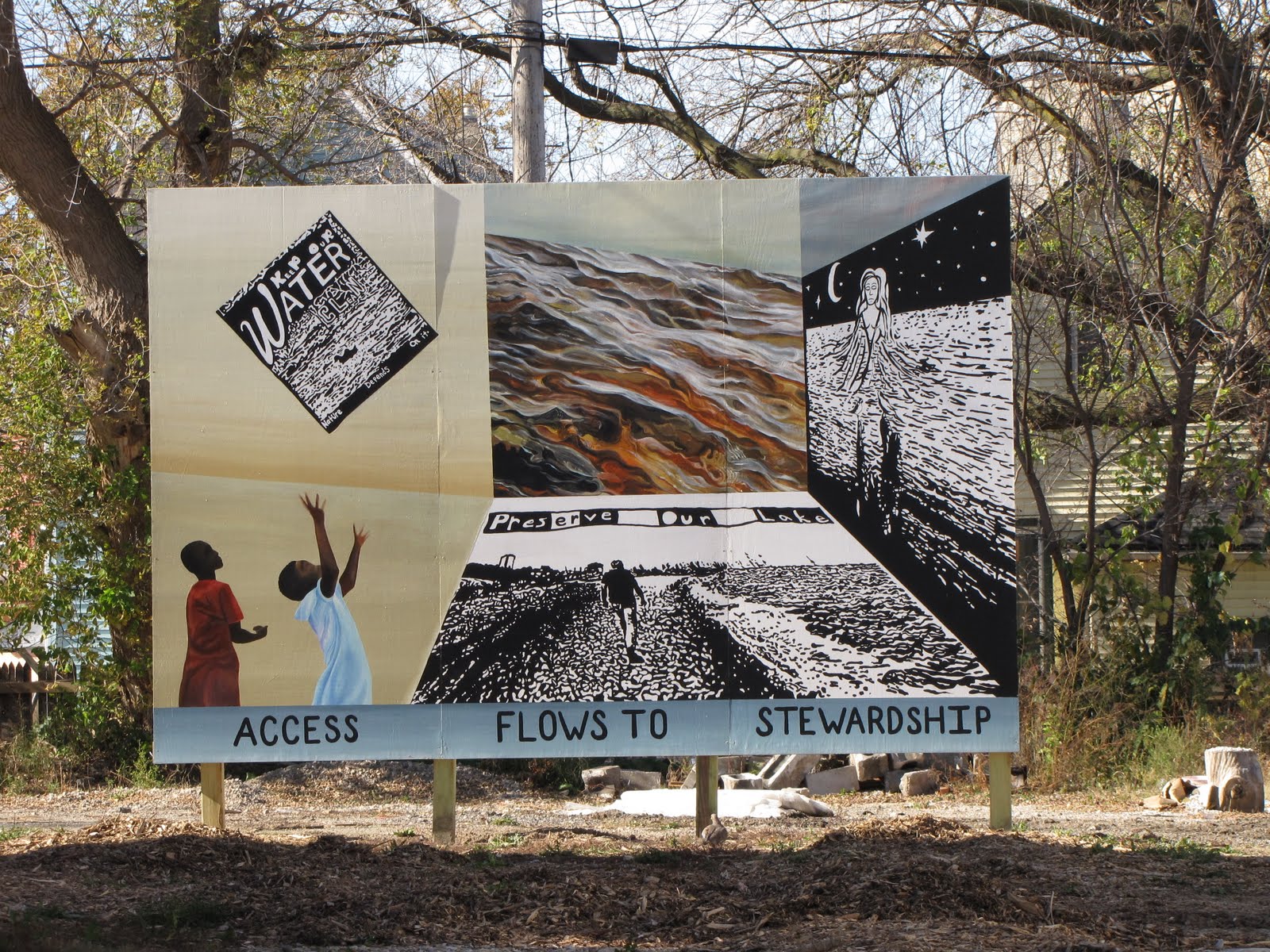
My permaculture peeps in Athens are meeting next Monday to talk about the role of art and murals in social change. Thought of you guys today! Here's some inspiration!


Walnut Way Forward

I have a serious amount of blogging to do, and I will catch up, but here’s a short update. I have a few weeks between leaving Minnesota and going to the Dominican Republic. In the interests of money and time, I decided against going back to Europe (turned down an opportunity to go to Terra Madre, agggggghhhh—what WAS I thinking?) and decided for staying in the United States and taking a tour of food sovereignty movements in my own backyard. There are a whole slew of urban gardens, sustainability initiatives and fabulous farms between Minnesota and Georgia, and I’m hitting as many as I can!

Yesterday, I left Minneapolis (after a fabulous local breakfast at butter cafĂ©) and drove to Milwaukee to visit some of the urban agriculture projects of which I have long been a fan. Colleague and friend, Nik Heynen, hooked me up with Walnut Way, which is a non-profit urban renewal project in a previously vibrant community, but until very recently a red lined, drug and prostitution haven on the border between two police districts. This neighborhood was a no man’s land until Sharon Adams came back to town and straightened a thing or two out.


The project started with community meetings to identify pressing needs. Among other things, there was a dire need for storm water runoff management. This is not the first time that I’ve heard of waste management as a pressing priority in poor, urban neighborhoods, but the global scope of this local need was really striking. The runoff of contaminated water affects this neighborhood, the regional watershed, the Great Lakes ecosystem, and ultimately the Atlantic Ocean. Sharon, and her partner Larry, researched the best way to do this, and among other things, including cisterns and rain barrels, started “rain gardens”.


Rain gardens are shallow wells built into the yards of the neighborhood residents that literally siphon rain water off roofs via downspouts, into small—virtually unnoticeable--wildflower gardens. A second need in the community was restoring the neighborhood continuity with housing in the community’s numerous vacant lots. The neighborhood, once a vibrant African-American community in Milwaukee’s jazz scene was redlined, disinvested and abandoned in the 1970s and 1980s. The detruction and removal of hundred year old houses left the community with a blighted landscape and no prospects for renewal. Except for a planned freeway through the heart of it, which was later abandoned. Thank god.


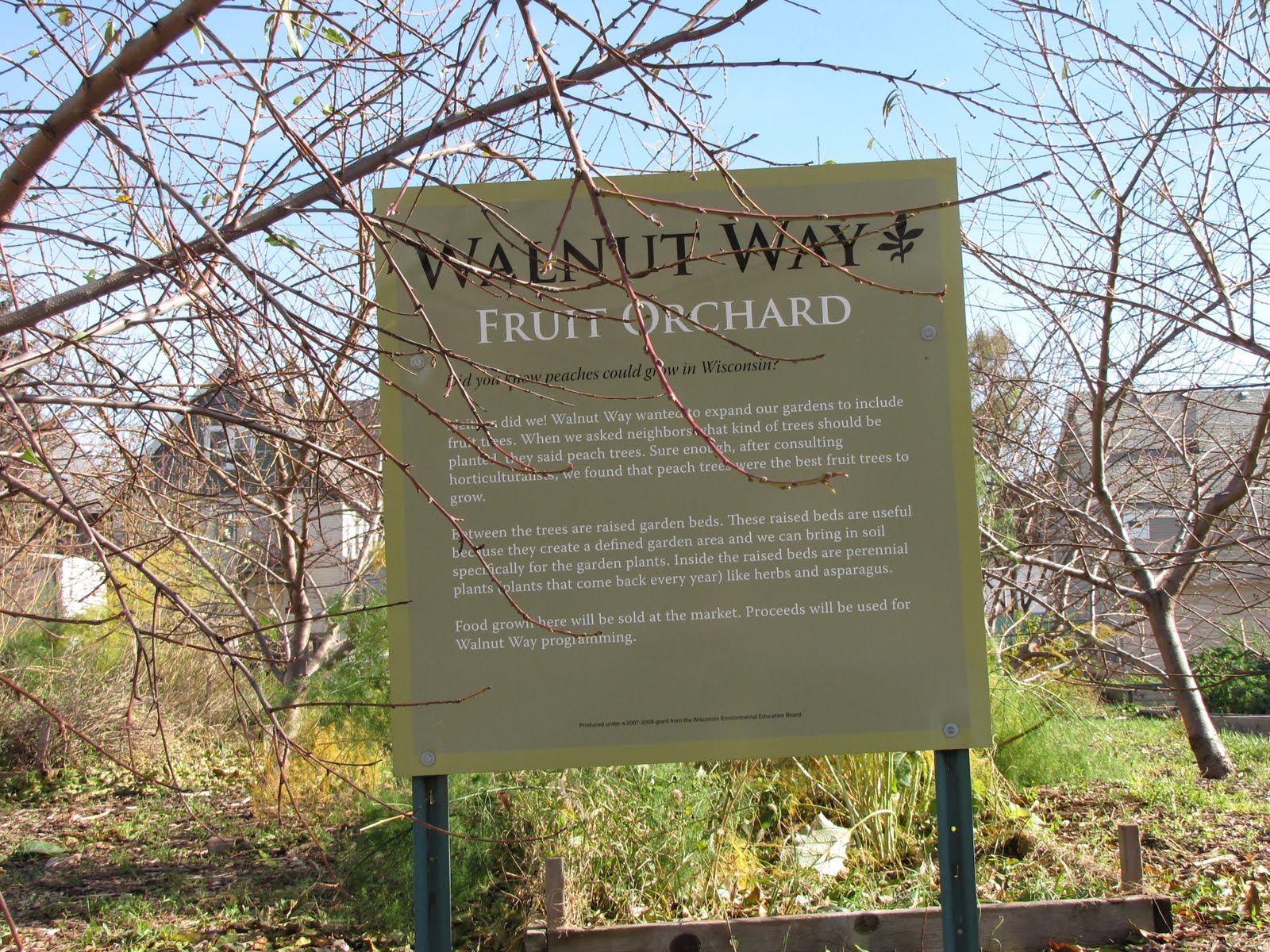
The city sold the vacant lots for a $1 to encourage building in the neighborhood. There are now home to peach trees, raspberry bushes and raised beds for vegetables. The majority of the produce is sold in the not for profit “Fondy Market” and the remainder is distributed throughout the community. The project has since expanded, with a very large grant by real estate tycoon Joe Zilber via the Zilber family foundation, to the Lindsay Heights neighborhood, to the north of Walnut Way.

A few kids down the street, like kids all over the world, wanted me to take their picture (I love this so much), and then proceeded to take me on a tour of their neighborhood. They, like their mom and her sister, are recipients of the food grown in Walnut Way gardens and are growing up in better housing, a more cohesive community (everyone knows everybody) with healthier bodies and with opportunities for meaningful work in their neighborhood, that was unheard of ten years ago.

The gifts of gardens keep on giving.

Tuesday, October 19, 2010

(Almost) Losing Seneca Pink Lady

This morning, I discovered why the mice have been so noisy in the night in my cabin in the woods. They have steadily and industriously stripped the seeds off the cobs of the Seneca Pink Lady corn and stored them in various places, including my suitcase. I have been cursing them nightly for their noisy projects, but Lord Ganesh, the Hindu god with the elephant head who removed obstacles and rides on the back of a rat, daily stays the hand of execution. My firm belief in the sanctity of life tells me that there is nothing more senseless than me destroying the life that carried on before I got here, and will remain carrying on long after I am gone. Little did I know that in my magnanimity, I was feeding them endangered heirloom corn!

I discovered this to my horror, this morning. As I picked out some clothes to wear, three kernels of pink corn rolled out of them. I ran, half naked, to the kitchen, and saw the now completely naked cobs of corn. I was already processing a tremendous amount of painful present and past emotional damage in my isolation here, and I don’t think devastated could really cover how I felt at this complete failure of my responsibility to these seeds. Trying to put on a brave face, I held the three remaining kernels in my hand and told myself it didn’t matter in the grand scheme of things. And how was I going to grow corn in my backyard anyway. Forget about it.

I then realized that I was feeling that the mice had taken everything from me and left me with nothing. This seems to be the story of my life, and a better allegory could not be made for my present emotional state. Through my tears, however, I realized that they had taken what they needed, and left me with what I needed. With great care and diligence, I could plant these three survivors and bring the corn back to plenty. Just like I had everything I needed to bring back—with great care and diligence--my own emotional life to plenty. I carefully wrapped the seeds and stored them in a safe place, promising that when I finally had the chance, I would plant them out and grow them (along with other endangered heirlooms) on the Trauger farm.

Feeling better, I finished dressing. As I dug through my clothes, I discovered dozens and dozens more kernels that had been carefully removed from the cob and laboriously carried to the bedroom and stored in the safe place that just happened to be my suitcase. Life is strange and wonderful when you just let it live. My furry friends had packed my share for me.

With hope and joy, you can turn anything around, and when you carry on, you will very likely find a lot more than you thought you had. I said a little prayer of thanks to Ganesh. And to those little noisy mice for taking care of themselves, and for taking care of me.

Wednesday, October 13, 2010

Walleye supper

The walleye supper is an institution in the Northwoods. Walleye pike is a much prized and delicious fish found in Minnesota’s many lakes. Churches, fraternal organizations and other associations of civil society regularly hold a walleye fry as a way to gather people together and more often than not, as a fund raiser to send kids to camp, or to help raise money for someone’s emergency medical bills. People brake for walleye. Tonight, after a weekend of superlative connection with my family, including a blissful several hours with my beautiful, charming and talented nieces--I am not biased-- I hosted my own walleye supper in my incredible cabin in the woods.

I have been staying here for a few weeks, and it is a virtual paradise. In spite of a rather significant mouse/bat/squirrel problem, this cabin has been my refuge and sanctuary. There is no internet and no cell signal, so I find myself with a surfeit of hours with which to occupy myself. I manage by reading—and have managed to do more reading in the past two weeks than in the last two years. I also find a luxurious amount of time to cook. My nieces, Taylor and Alexis, and I spent a long time last night talking about the joys and pleasures of cooking. As Taylor put it-with complete sincerity—“I like to cook. And eat afterward”. I feel like I have found the sisters I have never had.

So tonight, after we all went our separate ways—they back to work and college in the Twin Cities—and me to my cabin in the woods, I decided to make a very special dinner for myself. I took my cue from Alexis, who now has a “big girl” 9-5 job, and who spends her entire evening after work shopping, cooking, sharing and cleaning up after a delicious meal made from fresh, organic, and local ingredients. It must be genetic. She also spent a year with a vegetarian family Paris, so she knows something about how to cook righteously.

I went to the grocery store this afternoon, and as we had discussed, following Michael Pollan’s, rule # whatever, in Food Rules, I stuck to the edges of the grocery store. I spent a lot of time in the organic produce section, and as I wheeled over to the dairy section, I happened to pass the meat counter. I have been craving walleye for a week or so, ever since Tony mentioned taking me out to “net” walleye. The native population in Minnesota has rights to net rather than line fish on the lakes. (Having spent more than a few completely hateful hours trying to catch a fish on a hook, I can totally get behind netting as a way to get your year’s worth of walleye in the freezer). Natives cannot, however, sell any of their harvest.

Since I couldn’t buy it, I volunteered my time in exchange for a few filets. This fishing expedition never came to fruition for various reasons, so I was stuck with a walleye craving and no fish in the freezer. I found that the local grocery store (for which my brother worked about 30 years ago) was stocking some walleye filets from Canada. A meal of fish, rice and greens, materialized in my head, and I went for it, in spite of all kinds of reasons not to go for it, including not having the faintest idea where it came from in Canada, under what conditions it was caught, and for whom the $9/pound benefited. But I had rice, and it needed walleye all of a sudden.

A few weeks ago, I went to a drum ceremony on the reservation in Naytauwash. This ceremony constitutes its own blog post, so I won’t go into a whole lot of detail about it now. In short, a “big” drum which was gifted to the Ojibwe by the Lakota is brought out to the community and is played. The reasons for bringing out the drum are vast and complex, and I will do my best to explain this elsewhere. As part of the day, the women who guard the drum (ogichidakwe) distribute gifts of welcome to all those present and I was the incredibly lucky recipient of a pound of manoomin—wild rice. Wild rice constitutes its own blog post as well, and I have been remiss. Mea culpa. More later on that…

Wild rice grows in the lakes in the Upper Midwest and Cananda and is one of the staple grains for the Anishinabeg people distributed throughout these territories. The gift of rice was humbling in the extreme, and I passed on half of it to an elder who spoke with me at length about food sovereignty. The remainder sits in my kitchen waiting for a beautiful moment like tonight.

I have been helping to put the Farm-to-School gardens to bed for the winter and there is a surplus of broccoli in one of them. The big heads have been harvested already, but the tiny side shoots sweetened by the recent frost have been finding their way into my harvest basket on more than one occasion. Tonight, I panfried the walleye in a little salt, pepper and coriander and topped it with cremini mushrooms sauteed in garlic and oregano. If I knew more, I would be eating wild mushrooms, and if I lived here, that oregano would have come from my backyard not a farm somewhere fortunately not too far from here. The garlic came from a garden I visited somewhere on this journey. A big pile of the rice and an even bigger pile of broccoli shoots and greens topped off a plate full enough for two.

As I have said before on more than one occasion, eating in your local foodshed requires knowing when, where and from whom to get your food. In this case, everything I put on my plate was available locally, and all of it was, or could have been, obtained without money, in exchange for showing up and participating. In less than a month of showing up here, I have all of this already in place. It can be done anywhere, at anytime, by anybody who brings a spirit of reverence, cooperation and dedication.


Show up. Participate. Enjoy!

Friday, October 1, 2010

Keeping My Mouth Shut

Yesterday, I figured out why I have had writers' block and I am only taking pictures of swans and fall foliage. By some fantastic stroke of luck, I have been taken under the tutelage of a White Earth man, who has introduced me to some important animate nouns including ininatig, manoomin and asema, brought me to elders and shared with me the drum ceremonies of White Earth. I'm not at all sure I understand any of this in any deep way and I certainly don't know enough to say anything about it. I do know after a month of being here, that food, tradition and spirituality are all intimately linked, and that food sovereignty does not exist outside of spiritual and cultural sovereignty. But, until I know more than that, I'm keeping my ears and my heart open and my mouth firmly shut.

Thursday, September 30, 2010

Dinner with the Other Amy T.

I've been so out of it, that I've actually had not one-but TWO-dinners cooked by the other Amy T since I last posted to this thing. The other Amy T and I went to grade school together, and when she got all growed up she turned out to be a chef--and I got to be a lucky guest at dinner-twice in the last week. You can check out her blog here: http://www.sourtoothjournal.blogspot.com/

So the first time I had dinner with Amy T and her husband Aaron, and her small son Hank, was the day I stopped being homeless. Amy and I had (re)connected (over food, of course) on Facebook and since I was up in the area where we grew up and where she now lives and works teaching cooking clases, I kind of invited myself over for dinner one night. That night Amy made homemade pasta and we drank a lot of wine and chatted late into the night in their beautiful cabin on a river in the deep woods. I was relating my housing woes, and well, as luck would have it, there is a beautiful cabin sitting empty on the property next to theirs (owned by an artist friend of theirs from Brooklyn). Would I like to stay there? How quickly can I say yes?

They are going to have to throw me out. Or I will start paying rent. One or the other. I'm not leaving.

To sweeten this sweet deal even more, Amy invited me over for dinner again. (I really like how this is going.) She made chicken cacciatore from chickens they had just purchased from George and Mary's Best Darn Chicken 'Round in Frazee, Minnesota. I swear I am not making up, elaborating on or in any way hyperbolizing the name of their business. It was also the biggest darn chicken 'round--weighing in around 8 pounds a piece. She cooked up some broccoli from Hmong farmers in Minneapolis--blanched and pan fried in butter and garlic. Same with the potatoes from her garden--Yellow Fins, also blanched and roasted in olive oil til they were crunchy, tasty perfection. And she also slow cooked some chicken breasts in brown butter and herbs until that was mouthwatering. But the piece de resistance--for me--had to be the chicken of the woods mushroom that she roasted up in the oven.

Right now, I am regretting deeply the fact that I left my camera back at my cabin. I should have known better--but a girl respects another girls blog, eh? This was the biggest darn mushroom I've ever seen and it was so beautiful, sitting with warm earthy tones in the soft light of the kitchen. Words cannot really describe the incredible taste--it was like a big beefy morel--unlike anything I've ever eaten. I have seen these guys out in the woods--but never dared to eat them.

How's that for growing, cooking and eating outside the system!? Right outta them woods!

Writer's Block

Not sure what's up with me lately--haven't been taking pictures, haven't been writing, haven't been doing much but thinking. I think this is a good thing, but I regret some missed photo ops and some creative thoughts that got away before I caught them on paper. I think it's a combination of a lot of things--one of which was being semi-homeless for a week or two. I was bouncing around a bit from home to home, feeling a lot like Goldilocks. But I think I've settled on the perfect spot for the rest of my time here-a gorgeous art studio cum "pond-home" on the edge of a bog on the edge of the woods, on the edge of the prairie. Maybe I've just been a bit lost in the beauty of it all.

My companions are a rafter of turkeys, a convocation of eagles and a whiteness of swans. I stumbled across this great good fortune through the generosity of old friends, after a series of unfortunate events involving mice in my bed and other obstacles to sleep. This new place also does not have internet which is turning out to be a durn good thing. Finally figured out why I can't ever get any reading done. So, I've been walking, reading, thinking, communing with nature--thinking about all the things I really don't need in life. And now, hopefully I'm back to writing. Since pictures are worth a thousand words, I might have to spill a lot of ink to share with you the events of the last two weeks. It's been pretty amazing. Stay tuned.