Sunday, September 19, 2010

Mom

I guess I come by this food stuff honestly. I just spent the weekend with my family in Northern Minnesota. Most of that time was spent with my mom, who I am pretty sure killed herself to put food on the table when I was kid. She worked in Bagley, Minnesota as a public health nurse for almost all of our time in the big woods of this great country. She got up at 5:30 am to milk our goats and feed our chickens and my horses. Then she drove an hour to work after getting my brother and I on the school bus for our hour long ride to school. She came home late at night and fed all the animals and cooked us dinner and made my lunch, helped me with my homework and put us to bed. We ate almost all our food from our land and she worked full time to support us.

When did she have time for herself?


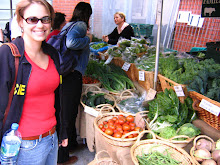
This weekend she and I drove around the White Earth Indian Reservation, where I am currently "stationed" and checked out the local food scene. This included a trip to Winona LaDuke's farm where we picked raspberries and I photo-documented the local guys parching the rice from this year's harvest. Then we went to see Daryl--who grows a lot of food for the White Earth Land Recovery Project's "Farm to School" program at Pine Point Elementary School. He fed us apples from his orchard and sent us home with two ice cream pails of apples for 4 bucks.

Mom and I spent the night near Itasca State Park and went out looking for the Wild Food Summit on White Earth in the morning. We missed them cuz they were already out harvesting by the time we got there. We tried to make up for this by going to Tamarac National Wildlife Refuge for a hike. We came across a mycologist there giving a lecture to his students on wild mushrooms, and found out about what we missed with the White Earth folks. We went for a hike anyway and saw all the beautiful mushrooms in the woods, enjoying their last hurrah before the winter.

We saw a beautiful family of trumpeter swans, and seeing them made me think about the beauty of family and the bonds of love that transcend everything. In spite of all the miles between us, we manage to stick together and give each other a lot of love. That's more important than anything else, and I feel so blessed by all the sacrifices and the wisdom my mom has shared with me. Thank you. Love you.

Wednesday, September 15, 2010

Saving Seneca Pink Lady

So, I’m up at White Earth, settling in and finding myself doing a lot of grant-writing. Putting a lot of resources into grant-seeking seems to be the fate of most non-profits, I’m afraid. It makes sense from a financial point of view, especially for farms and food-oriented enterprises. There isn’t a lot of money to be made on producing or distributing food. There are reasons for this—most of which I don’t agree with—such as cheap food policies that make food plentiful and mostly bad for us, and which drive farmers to bankruptcy when the costs of production are greater than the market price. This also tends to keep would-be farmers from even trying out the project of agriculture at all. These structural constraints leave a few farmers with big operations producing a few crops that are engineered to be big yielders that need to be babied with a lot of chemical fertilizers and pesticides. These crops are then turned into value-added products such as high-fructose corn syrup (soon to be relabeled “corn sugar”). Yeah that would be the mostly bad for us (and them) part.

In the meantime, thousands of varieties of food crops which have been locally developed over centuries to provide good food for small communities of growers and eaters have been lost in the push towards monocultures of high-yielding hybrids and GMOs.

Seneca Pink Lady is one such variety.

So, I was minding my own business the other day, toiling in the money mine, almost ready to call it a day and think about supper, when Winona came home with five garbage bags full of corn. Clear the table, she said, this corn needs to be husked and braided tonight. Facing 300 ears of corn at 8 pm, suddenly made me very interested in budgets, narratives and justifications. But there was no way out of this one, and once I fully understood the project, I was very turned on to the idea.


Winona had been given a few ears of a variety of pink and red colored corn (as opposed to white, yellow and blue) that is grown for cornmeal by a First Nations tribe in New York. She made an executive decision (as executive directors of non-profits get to do) to grow it out as the White Earth Land Recovery Project’s special corn variety. It’s not hard to understand the value of doing this. It’s not only visually beautiful to behold, it’s also like looking at a living museum. And, these three hundred or so ears of corn are some of the only remaining seeds of this corn ON THE PLANET. I was a little awestruck. And made haste to clear the table.


That evening we sat around and chatted late into the night while we “undressed” (as Winona put it) the ladies. The traditional way of drying the corn kernels for use as food, and for preserving the seeds for the next year’s crop is to braid the corn husks so that it could be hung up. The husks needed to be peeled back, with the silks and any underdeveloped tops removed. As I delicately peeled back the husks to reveal the speckled magenta kernels, I felt like I was handling jewels. The corn was fat, smooth and glistened with the luster of health and life.

The corn had been grown out by a local farmer (in a lot of horseshit, according to Winona) and it was remarkably robust and completely free of worms and mold. That would be because it was adapted over centuries to growing in northern climates. Duh. All it needs is some old fashioned fertilizer. No pesticides and no genetic engineering to turn a few ears of corn into tens of thousands of seeds. It is not a minor miracle, and was impressed all over again with the ingenuity intelligence and eye for beauty of our ancestors who took a wild plant called teosinte and turned it into this amazing food. More on this here: http://www.nsf.gov/news/news_images.jsp?cntn_id=104207&org=BIO


The next morning I, and another volunteer, Erica from the Shinnecock tribe on Long Island, braided up the pink ladies and hung them up to dry in a room in the upstairs of Winona’s cabin. It felt like a sacred ritual, and in many ways it was. It was a tribute to the wisdom of the past and a pledge to work toward the preservation of life for the future. If that isn’t a ritual worth doing, I don’t know what is.

Grow, Cook, Love

A lot of people have been joking around that my Grow, Cook, Eat tour is emulating the book/film sensation Eat, Pray, Love. Even though I know yall are teasing me, I’m still pretty flattered. Difference is, I’m not interested in putting love at the end of this thing. Love is woven into every moment of all these gatherings around growing, cooking and sharing of food. The best part of this leg of my trip has been a return to love—with friends and family in Minnesota. I understand a lot better now how I came to be where I am, and why I care about the things I care about. And why I’m on this journey in the first place. It’s a real blessing to land here—in this place so close and so far away from home—in the middle of my journey. It’s a reminder and an inspiration.

My mom and my sister-in-law both indulged my invasion of their kitchen on my way here, and I only barged my way in because I saw local food sitting there in the kitchen that needed to be cooked and eaten. And in both cases it wasn’t food that was purchased in the local farmers’ market or CSA or anything anywhere near that. They—or their family members—grew it themselves. I come by this honestly, I guess.

After hanging out here on Round Lake and invading Winona LaDuke’s kitchen for a few weeks, my best friend for over thirty years, Becky, alerted me to a Harvest Festival in Duluth. I brake for harvest. So, I packed up a weekend bag and drove over to one of my favorite places in the world. I think the festival was just an excuse though--we just ended up flying kites on the lakeshore with the kids instead of doing much with the festival. And the real highlight was reconnecting with my kindred spirit, her kind and wise husband and their bright, inquisitive and beautiful children.


And we shared two completely locally produced meals together. When I arrived the first night, the chicken Becky and Brad has grown that summer was already on the grill, the roasted veggies (potatoes, onions and carrots) from the garden (complete with whole heads of roasted garlic!) were sweetening up in the oven and the sweet corn was waiting to be shucked and boiled. It was my kind of place, alright. Becky has had a dream realized this year when she started a small CSA. She has been dreaming about farming for many years and this year she sold three and half shares, and fed her own family on a small but ambitious garden. I am so proud of her!

And happy too—especially when I get to enjoy the fruits of her labor. I am promised pork chops when I come back next month.

The next morning we took the kids and headed over to a local dairy and pulled raw milk right outta the bulk tank. Take that Georgia and your raw milk paranoia. This is how real people get real milk. (Unless of course you are in India and you actually milk the buffalo yourself). The smell in the milk house transported both Becky and I back to our childhoods when we would go over to our neighbor (and her relative) to get raw milk from his bulk tank. I was especially proud of her as she poured the milk into beer growlers. When you can’t get beer, get milk.

When we got home, Nik, Becky’s son, who has some very special gifts when it comes to food, discovered that I had a box of Indian spices in the back of my car. I don’t go anywhere without my kitchen anymore, and out of sheer laziness these hadn’t made it into Winona’s kitchen yet. This provoked a keen interest in Nik to sample, smell and taste what could be done with them. I couldn’t have been happier to oblige. I offered to cook up a “full Indian dinner” for them and made a potato and kale dish and a tomato cheese dish. We all went out to Becky’s garden and harvested everything we needed for dinner. An hour later we were enjoying the fruits of her summer labor. The paneer was a special joy to make out of the fresh raw milk, and it was a crowd pleaser for sure.


Before we ate, we gathered around the table and prayed a prayer of thanksgiving for the special gifts of being with each other and for the food that we had been given so graciously by the land.

Love. Pray. Love. Eat. Love. Repeat.

Wednesday, September 8, 2010

Farm to School, Literally

So, I was feeling a little alienated from where my food comes from. You know, not feeling connected to the process. Just eating food grown by who knows who, who knows where. Feeling a little bit like a fraud, or at least a travel writer, just relating adventures in restaurants in exotic places. Not anymore, no. I’m getting up close and personal with it ALL. I am currently on White Earth Indian Reservation in Minnesota, a mere stone’s throw away from where I spent my childhood. I am also, incidentally, living *in* Winona LaDuke’s house. I think it goes without saying that living with one of your idols (in a gorgeous cabin on a lake) is a great deal more than a person really can and should ask for—and certainly whoever is in charge up there, thanks for answering my prayers (or whatever muttering you heard)--in spades.

So, my jobs as a volunteer have so far included dog walking, tomato picking, melon schlepping, corn husking, grant writing, rice parching, pow-wow dancer assisting and horse petting. That’s just been the last three days. Whew! I think salsa making, picture-taking and rice harvesting are in my future. The melon schlepping is how I got up close and personal with the grow, cook and eat thing, and yeah, there’s a reason why we let other people grow the stuff for us in some warm climate somewhere else and it gets put in a little box and we put that little box in the big box in the kitchen and when the timer goes ding we eat. Well, I don't. But I like pain.


I was minding my own business the other night, cooking my dinner (sweet corn, broccoli and raspberries from Winona’s farm, that I didn't grow, but I picked). The phone rang and it turns out that Bob, who helps with the Farm-to-School program didn’t have wheels, and the melons, lopes and sweet corn needed to be at the school by 8 the next morning. And it’s pouring rain, freezing cold and getting dark. Sure, I would LOVE to help. There is a reason there are no pictures of this part, dear reader.

An hour later, down long twisty gravel roads that are getting a bit slushy and slippery from the rain we arrive at Henry Miller’s farm. 18 dozen ears of corn are lying on the lawn and we scurry back and forth carrying a few ears at a time and throw them in the back of the truck. Next stop is Robert Johnson’s farm for 30 watermelons and 30 cantalopes. Bob and Robert make a lope brigade and toss the melons in the back seat. Mercifully, pretty soon we’re dry and warm and on our way again. Both Henry and Robert are Amish farmers, and recent arrivals in this part of Minnesota. The Amish communities further east are facing tremendous development pressure and are moving west and north to escape it. Did I mention that it snows for 6 months of the year here? Not a huge amount of development pressure here, no.


I got the melons, lopes and corn back to the house and my work was done for the night. But the next morning Winona asked me to help out with shucking a hundred ears of corn for open house at the first day of Pine Point Elementary school. Sure, why not? It turns out that the school only has one part time cafeteria manager and she has one part time assistant, which is not enough hands to shuck corn or cut melons. (And a horrific under-prioritization of health and well being of our children, if I might add.) I ended up staying long enough to hand out the corn too, and it was a pure joy to watch the little kids eat it. See for yourself.

Can we have more of this, please?

Saturday, September 4, 2010

Random Acts of Locavore


Breakfast at home when I returned from India. Local melon, kale, eggs, bacon, cheese, bread...oh my! All from the farmer's markets in Athens. Ate this out in the garden thinking about how good life is.


Supper at Mom's--the Indian feast I was dreaming of while in INDIA! Appetizer of papad, salad with chunky chat masala and cilantro chutney; main course of paneer makheni, chicken tikka, aloo gobi, cucumber raita, roti, mango pickle and brown rice kheer for dessert--the works! Lots of stuff from Mom's garden.


Squash soup at my brother's house--squash and leeks from family gardens; rosemary from my shrub in Georgia and apples from an old tree growing in the woods around the corner from my brother's house. Perfect for a chilly fall day in Minnesota!


Sunday, August 29, 2010

In a Nutshell

Grow.


Cook.


Eat.


Dirty Hippie Festival

It's taken me a long time to mentally get back to the United States. I am still (literally) dreaming that I am in India, and I find it very hard to adjust to living alone again. This will all change tomorrow when I get in the car for a 30 hour drive to White Earth Indian Reservation in Minnesota. But first, I have some unfinished business from Belgium to take care of. On my way to India in June, I stopped to visit my friend and colleague, Stijn, who introduced me to a bunch of permaculturalists in Belgium. I got an invitation I couldn't refuse from one of those kind folks, Cyrille, to return at the end of my time in India for a permaculture festival in Belgium. The timing was perfect so I rerouted myself from a decidedly unsustainable stop in Dubai, to a beautiful grow, cook and eat week in Nethen, Belgium.

Permaculture tends to resist definition, and like everything else, has its fair share of contradictions. It has its roots in sustainable food production, but extends to virtually everything that humans need for life. It is also a philosophy about better ways of living. Permaculturalists believe there is a fairer, cleaner and more joyful way to live. The "perma" part of permaculture is the idea that all our destructive and temporary systems based on finite fuel sources can be replaced with something more life-giving that lasts. There was plenty of evidence of this at the festival--all the local, organic food cooked up in the kitchen; the tents, yurts and teepees that provided beautiful shelter; joyful people who gave workshops on everything from biofuels to loving; bucket showers and composting toilets that kept us all clean; and healthy, happy folks working hard with big smiles all day long.


I gave a little workshop on setting up community seed banks and donated a good amount of time to the kitchen--chopping, stirring and serving up good food in a lot of really good company. My friend Regan finds chopping vegetables relaxing, and had she been working in the kitchen at the festival she would have been as blissed out as a yogi in an ashram in Rishikesh. I have never chopped so many vegies in my life. I'm not complaining, mind you--it was incredibly fun work with so many kind hearts, and this is what it takes to feed a lot of people really well. A lot of sharp knives, strong wrists and good natures.


For the first few days I was there the cooks provided meals for the organizers--about 50 in all. On the last day of the festival, which was open to all the festival attendees and the community, the kitchen staff cooked food for close to a thousand people. Needless to say, to feed this many people three vegan meals per day with local food takes a small army of vegetable choppers working non-stop. It was a beautiful sight to behold. And proof that it can be done.


The festival was held on an organic farm about an hour outside of Brussels. The farmer donated his cow pasture to 750 dirty hippies for a week (imagine that happening in the U.S. post Woodstock?) and donated about 40% of his vegetable production to the festival. I'm not sure what came from where, but I spent an afternoon chopping swiss chard, and enjoyed a nice swiss chard and mushroom saute that evening. The next day I wandered around the farm and came across evidence of a lot of swiss chard production. It gave me a really good feeling to think that food was grown, cooked and eaten in a space with a radius of about 20 feet. In my opinion, this is the way it should be.


This was all a stroke of incredibly good fortune, and a turn of events that still leaves me a bit shocked. I set out on this journey with few expectations, but hoping to find a few examples of how people are building alternative relationships with food and agriculture throughout the world. I was amazed to find out how much is going on outside the capitalist system, and really impressed with all the efforts of individuals and communities to do food and agriculture differently. This festival was a defining and shining example of how to do this, and how to do it well.


It was a beautiful and unexpected gift to have this festival arrive at the end of this phase of my travels. Permaculturalists believe in the importance of closing loops to eliminate waste and generate harmony in systems. This beautiful full circle in my intellectual and emotional travel is tremendously symbolic and poetic. I am grateful, humbled and awed. Permanently.